
Preparing for your strategic planning meeting
Congratulations, you, and your team have committed to developing a shared vision for the future!
Here are some thoughts to help frame and prepare you for the upcoming meeting
- The Pledge. The strategic plan is not a license to do stupid things.
- Roles. Participants act as Executives, considering the organization-wide impact in every discussion and decision.
- Meeting Etiquette. It’s important that everyone hear, understand, and incorporate other team members insights.
- Strategic Planning Concepts. Understand differences: an event vs. a process; strategy vs. tactics; strategic vs. operational; results/outcomes vs. actions.
- Strategic Plan Timeframes. The plan visualizes the future over various, human-relative, timeframes. What do we want the future to look like in a generation, a decade, and a demi-decade? What do we focus on accomplishing within a year-and-a half, a year, a quarter, and today to make that visualization a reality?
- Evolution of the Strategic Plan. The plan is not chiseled in stone. Elements of the plan evolve at a difference pace as we gain more insights; achieve objectives, and the environment changes.
The Pledge
Put your hand over your heart and repeat after me: “I will never do something stupid.”
Go ahead, trust me.
“I will never do something stupid because of something written on a sheet of paper.”
The strategic plan you develop is a tool to enhance focus and communications. It is not a license to do stupid things.
This is a pledge that I have every member of every planning team take when they are working to define their strategy. Strategy is the collective set of answers to the questions about what we want the future to look like, why, and how to make it happen. Effective strategy requires specifics, such as these examples:
grow revenue to $25 million within five years
identify and grow a new market to account for at least 10% of revenue
reduce dependence on our largest customer to under 25 percent.
Executives are rightfully cautious about volunteering specific numbers, based on concerns that doing so will contribute to their team making stupid decisions in the future, such as:
allowing managers to use planning numbers as clubs to beat them with,
not adjusting to new information and changes in the environment, or
missing serendipitous opportunities.
This pledge and utilizing the processes of strategic planning that incorporate ongoing adjustment, frees you to develop, implement, and manage the right strategies for your company’s success.
Participants' Role
1. Look at the organization through the eyes of the CEO.
2. Represent the organization, not yourself, not your people, not your department, not your function.
CEO’s Role
1. Act as a participant, not as the “omniscient individual.”
2. Suspend your usual problem-solving and “time-saving” operating mode.
Meeting Etiquette
Abide by the ten rules for productive meetings, rules that develop trust, consensus, and commitment.
1. Listen actively.
2. Speak up and say what needs to be said – there are no sacred cows.
3. Focus on solving problems rather than placing blame or being defensive.
4. Respect differences of opinion.
5. Avoid cheap shots.
6. Stay focused.
7. Add only new information to the discussion. Don’t flog a dead horse.
8. Permit only one discussion at a time.
9. Silence implies understanding and agreement.
10. Finish with consensus and commit to action.
Strategic Planning Concepts
Strategic Planning vs. Operational Planning. Strategic planning is concentrated towards attaining the long-term objectives of organizations. Operational planning is done to achieve short-term objectives of the company. These are used to set priorities and align the resources, in such a way that leads to the accomplishment of organizational goals.
Strategy vs. Tactics. Strategy is an overarching plan or set of goals. Changing strategies is like trying to turn around an aircraft carrier—it can be done but not quickly. Tactics are the specific actions or steps you undertake to accomplish your strategy.
Results/Outcomes vs. Actions. The difference between results/outcomes and actions is that an outcome is information, an event, object or state being produced as a result or consequence of a plan, process, accident, effort or other similar action or occurrence. Results are tangible. Action is an activity that might or might not produce a result. (One takes action but celebrates results.)
Strategic Planning vs. The Strategic Plan. Strategic planning is a process rather than an event. The strategic plan is the outcome of the planning meeting. It documents the plan however it is not chiseled in stone. It is based on the best available information and thinking. As the team executes the plan new insights will emerge, environments may change, and assumptions will be proven or disproved. These new insights will be incorporated in the plan – tactical insights immediately, strategic usually during the annual planning meeting.
Strategic plan timeframes
The timeframes of the strategic plan are aligned with timeframes that resonate with the human condition.
The first three elements of the plan are Strategic – where we want to go The last four elements are Tactical – how we get there
- Vision: aligned with a generation, the average period, generally considered to be about 20–30 years, during which children are born and grow up, become adults, and begin to have children
- Mission: aligned with a decade, a point when people audit the meaningfulness of their lives as they approach a new decade in chronological age, further suggesting that people across dozens of countries and cultures are prone to making significant decisions as they approach each new decade.
- Strategy: aligned with a demi-decade, far enough in the future to affect a major change yet close enough to support sufficient detail to provide direction for tactical focus. Five-year timeframes have proven to be the most useful.
- Strategic Goals: aligned with Eighteen months, the time a newborn is no longer a baby but not quite a child. A strategic goal is strategic because it literally changes the status quo.
- Key Results Measures: aligned with an annual cycle, one that is embedded in the cycle of life. Individuals are conditioned to achieve objectives in time for birthdays, marriages, and/or religious celebrations.
- Action Steps: aligned with a seasonal cycle that is embedded in the cycle of life. Fall, Winter, Spring, Summer. Ninety days between planting corn and harvesting it. Tactical action steps are informed by current available resources and what’s been learned over the past 90 days. Further out than 90 days, actions are no longer tactical.
- Daily actions are the only thing you have control over. “Is what I’m doing today consistent with our strategy, mission, and vision?” If not, then adjust what I’m doing today or if the entire world has changed, reconvene the strategic planning team and change the strategy, mission, and/or vision.
How do you sustain strategic momentum?
Every year gather together a strategic planning team of the 5-12 people that will create the future and, as importantly, live with the consequences of that future.
Applying all their passion and competence over two days; they build and/or rebuild the Progress Pyramid from the bottom up by repeatedly asking how.
- How do you fulfill Vision? - by achieving your Mission
- How do you achieve your Mission? - by executing your Strategy
- How do you execute your Strategy? - with Strategic Goals
- Will the status quo get the job done? - unlikely, hence the need for strategic goals
- How do your goals change the status quo? - by implementing key results
- How will you implement key results? - by taking action in the here and now.
Once the team has reached consensus and achieved commitment you are free to focus 100% of your energy on implementation.

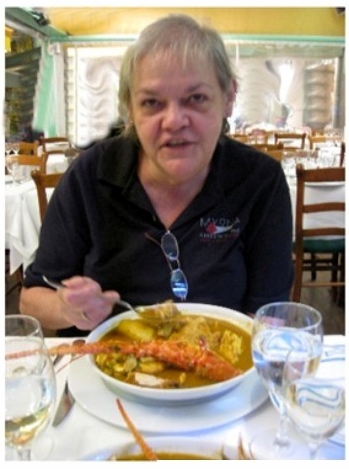 Mary became responsible for the family meals at age 11, when her father passed and mother stepped in to run the local bank and support the family. Mary made every family recipe her own. For over 60 years she consumed every cook book, instructional video, and cooking competition show. Not only could she literally taste recipes, she was a master process engineer, reworking recipes and prep to enhance nutrition, simplify procedures, and minimize the chance of error.